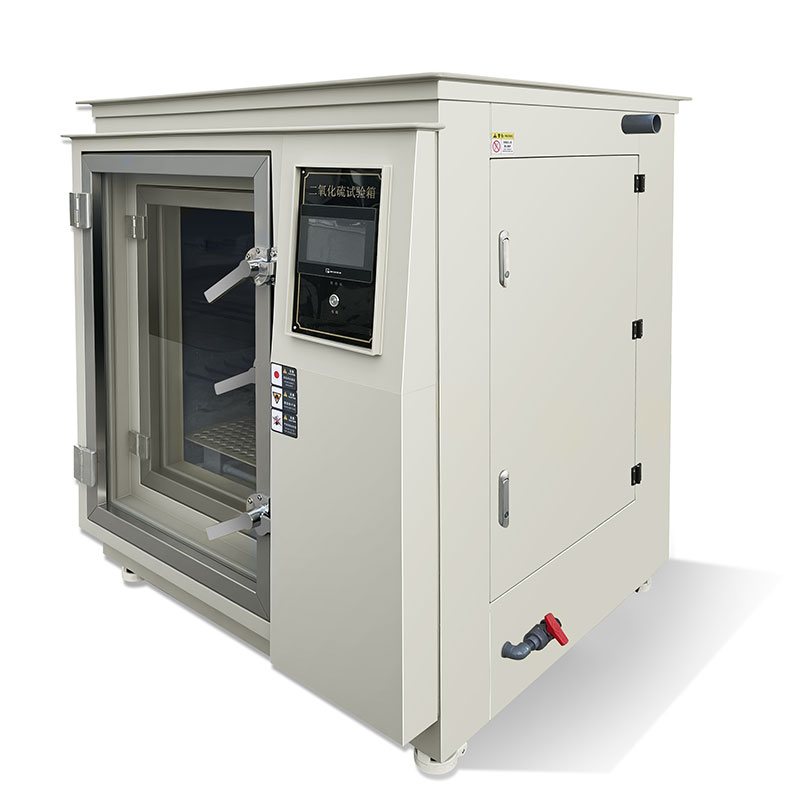
Chamber Structure, Design, and Control
Ø The outer chamber is made of SUS 304 stainless steel with an additional powder-coated finish, while the inner chamber is fabricated from SUS 316 stainless steel plates. All joints are smooth and even, ensuring a compact structure, bright appearance, and zero leakage.
Ø The sample chamber is welded from pure titanium plates, providing excellent sealing with no leakage. The chamber undergoes pressure-holding treatment to ensure long-term tightness.
Ø The system operates by introducing a specified amount of corrosive gas to the sample under high-temperature and high-humidity or high-temperature and low-humidity conditions. After a predetermined exposure period, the gas is discharged, and the samples are stored under specified temperature and humidity conditions for a designated period. This cycle repeats according to the test requirements.
Ø The dual-door sealed structure features an inner chamber door made of tempered glass or high-temperature-resistant transparent PC material. High-temperature and corrosion-resistant silicone rubber gaskets, along with stainless steel compression door locks, ensure airtight sealing. The outer door is made of powder-coated 304 stainless steel, and the inner wall is made of 316 stainless steel. A tempered glass viewing window allows clear observation of the samples inside.
Ø An adjustable-height horizontal sample rack, made of pure titanium combined with PP plastic materials, is installed inside the chamber and can be customized to meet specific load-bearing requirements.
Ø The equipment includes an integrated gas filtration unit. The exhaust from the chamber is filtered continuously, and any accidental leakage caused by operator error or equipment malfunction is immediately captured and discharged through the filtration system. Treated exhaust meets environmental standards and does not pollute the environment.
Ø Equipped with a sealed gas cylinder cabinet capable of storing two cylinders, including one SO₂ or H₂S cylinder and one CO₂ cylinder, to ensure safe operation. The cabinet includes a gas concentration detection device for checking the cylinder gases.
Ø Equipped with gas leakage alarms for the corrosive gases stored inside the sealed cylinder cabinet, as well as gas leakage alarms for the laboratory room. A total of two sets of alarms are provided.
Ø Designed with two-channel mass flow meters, one for testing a single SO₂ or H₂S gas line and the other for CO₂. The two mass flow meters are integrated into a single module for easy annual calibration. A cleaning system using nitrogen or dry air is installed for the flow meters to extend their service life.
Ø Critical spare parts are supplied, including one dedicated spare pressure-reducing valve, one spare humidifying lift pump, one spare water tank level switch, one spare water tank heating tube, and other essential components.
Ø The unique design and availability of key spare parts significantly reduce the likelihood of unexpected shutdowns during testing.
Ø Consumables included: two cylinders of gases, three sets of filtration materials, and three sets of safety masks and gloves.
Ø The chamber is equipped with two heating systems, including a water bath heater and an air dry heater, to meet the requirements of different standards.
Ø Electrical components are sourced from international brands such as ABB, Omron, and Carlo Gavazzi, or from Nader (UL-certified). All electrical components comply with U.S. electrical requirements.
Compliance with Standards
The equipment is designed and manufactured in reference to the following standards: UL 50E, GB 5135.7-2003, GB 5135.10-2006, GB/T 2423.33-2005 “High-Concentration Sulfur Dioxide Corrosion Test,” DIN 50018 “Sulfur Dioxide Test under Saturated Conditions,” GB 9789-2008 “Sulfur Dioxide Corrosion Test under Normal Condensation Conditions,” GB/T 3479-2017, and other relevant standards. It is suitable for high-concentration gas corrosion testing.